Laramie County Dog Registration Information
Service Dogs and Emotional Support Animals in Laramie, Wyoming
If you’re asking where do I register my dog in Laramie County, Wyoming for my service dog or emotional support dog, the key is to separate three different ideas: (1) local pet licensing/registration, (2) service dog legal status, and (3) emotional support animal (ESA) documentation.
In most cases, a dog license in Laramie County, Wyoming is handled at the city level (for example, Cheyenne or Laramie) or through the local animal control/shelter partners that support enforcement. A service dog or ESA may still need to follow local rules like rabies vaccination, leash laws, and (where required) licensing—while their access rights and housing rules come from different laws than pet licensing.
Where to Register or License Your Dog in Laramie County, Wyoming
Because licensing and enforcement are commonly handled locally, the most reliable starting point for where to register a dog in Laramie County, Wyoming is the city animal control and shelter partners that serve your address (inside city limits vs. unincorporated areas). Below are examples of official local offices and connected agencies that publish animal control and licensing guidance for Laramie County residents.
Cheyenne Animal Shelter (Cheyenne / Laramie County area)
- Mon: 8am – 6pm
- Tue: 8am – 6pm
- Wed: 4pm – 6pm
- Thu: 8am – 6pm
- Fri: 8am – 6pm
- Sat: 8am – 6pm
- Sun: 8am – 6pm
City of Cheyenne — Compliance Department (Animal Control)
City of Laramie — Animal Control (City of Laramie licensing guidance)
Laramie County (Combined Communications) — Frequently Requested Numbers
Overview of Dog Licensing in Laramie County, Wyoming
What “registering” usually means
When residents say “register my dog,” they’re often referring to getting a local license or registration tag—typically issued by a city or local partner agency. A local license can help with identification, reunification if your dog is lost, and compliance with local ordinances.
Licensing is usually local (city or municipal), not a single countywide form
A common point of confusion is expecting a single countywide “service dog registry” or “ESA registry.” In practice, most day-to-day pet regulation—including licensing rules, animal control response, and nuisance enforcement—is handled locally. Your correct office depends on whether you live inside city limits (such as Cheyenne or Laramie) or in an unincorporated part of Laramie County.
Rabies vaccination requirements and proof
Rabies vaccination documentation is a frequent requirement tied to licensing/registration. For example, the City of Laramie’s animal control guidance states you’ll need a certificate or receipt from your veterinarian showing when rabies vaccination was administered and when it expires to acquire a license. Keeping a current rabies certificate is also important for bite incidents, quarantine decisions, and compliance checks.
How this relates to “animal control dog license Laramie County, Wyoming” searches
People often search for animal control dog license Laramie County, Wyoming because animal control is the enforcement touchpoint (lost dogs, at-large complaints, bites). Even if the license is issued by a city office or partner shelter, animal control is often the place that can tell you exactly what applies at your address and what proof you need to bring.
How Dog Licensing Works Locally in Laramie County, Wyoming
Step 1: Identify which jurisdiction applies to your address
Start by identifying whether you live:
- Inside Cheyenne city limits: City of Cheyenne animal control resources and Cheyenne’s shelter/animal control partners are common starting points.
- Inside Laramie city limits: The City of Laramie requires pet licensing for dogs (and also cats/ferrets) kept in the city, and directs residents to obtain a license via the Laramie Animal Shelter or City Hall with rabies proof.
- Outside city limits (unincorporated Laramie County): Contact the county’s listed animal control numbers or the local animal control/shelter partner serving your area to confirm the current licensing or registration expectations.
Step 2: Gather required documentation
Most licensing systems are designed around two practical needs: verifying the animal is vaccinated for rabies and connecting the animal to an owner. Typically, you should prepare:
- Rabies vaccination proof showing administration date and expiration date
- Your identification
- Proof of residency (often requested for city licensing)
- Payment for licensing fee (amounts and discounts vary by jurisdiction)
Step 3: Apply in person or through the official channel your city uses
Some jurisdictions issue tags at city hall, some through an animal shelter counter, and some through a compliance/animal control office. If you’re unsure, call first and ask:
- Whether your address is within city limits
- Whether licensing is required for all dogs, and at what age
- What counts as acceptable rabies documentation
- Whether licensing can be completed in person, by mail, or through another official process
Service Dog Laws in Laramie County, Wyoming
Service dog status is not the same as a dog license
A dog license in Laramie County, Wyoming (or within Cheyenne/Laramie) is generally a local compliance item—similar to registering a vehicle, but for pets. A service dog, on the other hand, is defined by disability-related training and the handler’s need under applicable laws (most commonly associated with public access rights in everyday settings).
Do service dogs still need rabies vaccination and local compliance?
In most communities, service dogs are still expected to follow the same public health and safety rules as other dogs: rabies vaccination, leash/at-large rules (unless a leash interferes with trained tasks), and local nuisance ordinances. Where a city requires licensing, a service dog may still need the local license/tag just like other dogs—because the license is about vaccination/ownership identification, not about the dog’s disability-related working status.
Avoid “registration certificate” confusion
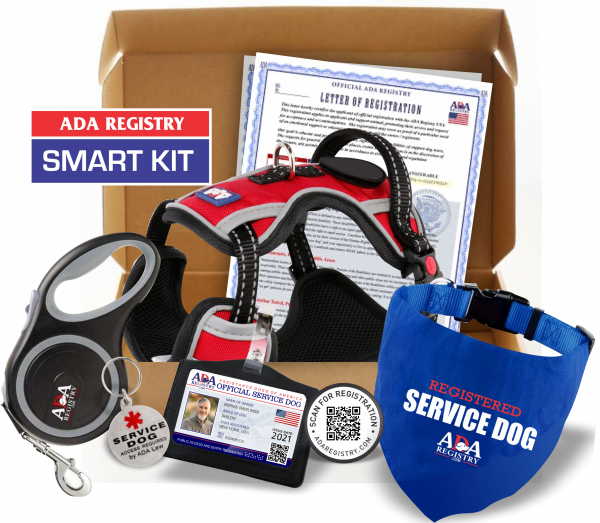
Many websites sell “service dog registrations,” but those are not the same thing as licensing with an official local office. If your goal is to be compliant in Laramie County, your most dependable steps are: keep rabies records current, follow local licensing rules, and understand your rights/responsibilities as a handler in public.
Emotional Support Animal Rules in Laramie County, Wyoming
An ESA is different from a service dog
An emotional support animal (ESA) typically refers to an animal that provides comfort or emotional benefit, but is not necessarily trained to perform specific tasks related to a disability in the way service dogs are. Because of that, ESAs generally do not have the same public access rights as service dogs in places like restaurants, stores, or other businesses open to the public.
ESAs still may need local licensing and rabies vaccination
Even if your dog is an ESA, local animal rules still apply. If your city requires a local license/registration tag and rabies vaccination proof, you should plan to comply the same way you would for any other dog. That’s why people searching where to register a dog in Laramie County, Wyoming for an ESA often end up working with city animal control, city hall, or a local shelter counter for the standard license.
Housing and documentation questions
ESA issues most often come up in housing contexts, not licensing. If you’re trying to solve a housing-related request, you’ll typically need to follow the housing provider’s process and provide appropriate documentation (when legally allowed/required). That housing process is separate from local dog licensing and is not handled by pet licensing counters.
Frequently Asked Questions
Typically, no. Service dog status is not created by a local license. What you may need (depending on your city) is the standard local pet license/tag that applies to dogs generally, plus current rabies vaccination proof. If you’re unsure which rules apply at your address, contact the local animal control office serving your jurisdiction.
Start with the City of Cheyenne animal control contacts and the Cheyenne Animal Shelter, which publishes local contact details and hours. They can confirm the correct process for a dog license in Laramie County, Wyoming as it applies within Cheyenne city limits.
The City of Laramie’s animal control guidance states that to acquire a license you can visit the Laramie Animal Shelter or City Hall, and you’ll need veterinarian documentation showing rabies vaccination and expiration dates. Call ahead for current counter hours and acceptable documents.
If you’re outside a city jurisdiction, start with the county’s published animal control numbers (including after-hours contacts) to confirm who handles enforcement and whether a local license/tag is required for your location. This is the fastest way to avoid applying in the wrong place.
No. An ESA-related document (for housing contexts) does not replace local licensing rules or rabies vaccination requirements. Licensing is generally a local public health/identification measure, while ESA documentation relates to specific housing situations.
Use a simple checklist so staff can route you correctly:
- Your street address (to confirm city limits vs. county area)
- Dog’s age and whether it is vaccinated for rabies (and the expiration date)
- Whether you need a new license/tag or a renewal
- Whether you are asking about a standard pet license (not a vendor “registration”)
Register A Dog In Other Wyoming Counties
Select your county below to get started with your dog’s ID card. Requirements and license designs may vary by county, so choose your location to see the correct options and complete your pup’s registration.
- Albany County Dog Registration
- Big Horn County Dog Registration
- Campbell County Dog Registration
- Carbon County Dog Registration
- Converse County Dog Registration
- Crook County Dog Registration
- Fremont County Dog Registration
- Goshen County Dog Registration
- Hot Springs County Dog Registration
- Johnson County Dog Registration
- Lincoln County Dog Registration
- Natrona County Dog Registration
- Niobrara County Dog Registration
- Park County Dog Registration
- Platte County Dog Registration
- Sheridan County Dog Registration
- Sublette County Dog Registration
- Sweetwater County Dog Registration
- Teton County Dog Registration
- Uinta County Dog Registration
- Washakie County Dog Registration
- Weston County Dog Registration